North America is getting closer to refining its own battery cobalt.
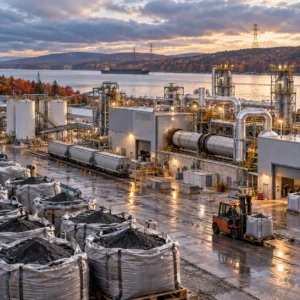
On August 26, Electra Battery Materials said it had finalized definitive agreements with Invest Ontario for C$17.5 million in funding toward its cobalt sulfate refinery in Temiskaming Shores, Ontario. The company describes the brownfield, fully permitted facility as North America’s first cobalt sulfate refinery.
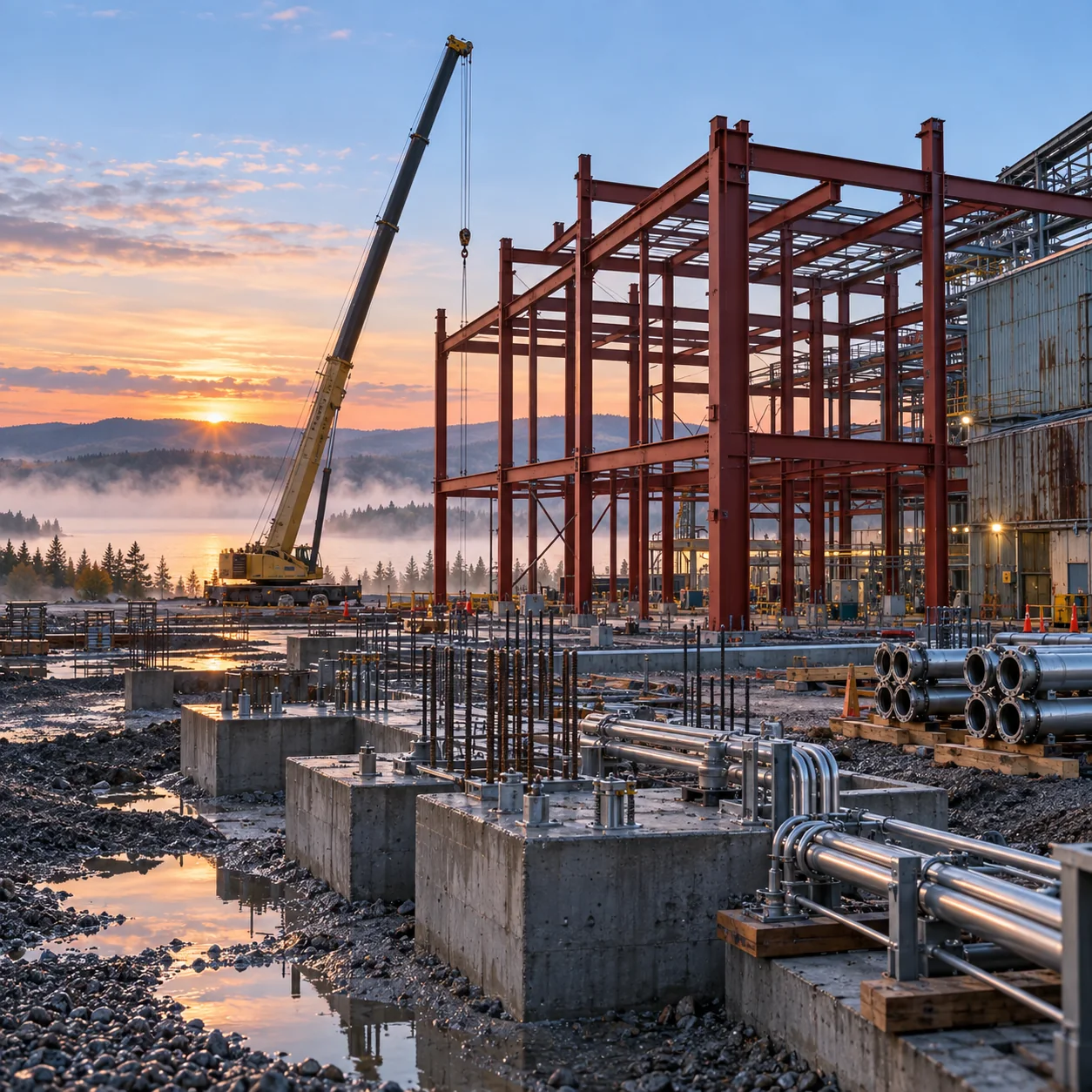
Ontario first committed the money in 2025. With the definitive agreements signed, that commitment is now contracted capital, and the funding arrives while structural steel, concrete, equipment installation and piping work are moving ahead on site.
That change matters.
A Refinery Aimed at the Weakest Link in the Chain
Cobalt is still a key ingredient in many lithium-ion cathode chemistries, and cobalt sulfate is the refined form that cathode makers actually use. Mining it is only part of the job. According to Electra, the vast majority of the world’s cobalt supply is refined in China.
That leaves North American battery makers with a gap in the middle of the chain. Ore and concentrate can be produced on the continent, and cells can be built here, but the chemical step that connects the two has mostly happened overseas.
Electra’s refinery is meant to fill part of that gap. Initial capacity is set at 5,120 tonnes of contained cobalt a year, rising to a maximum nameplate capacity of 6,500 tonnes. Cathode producers and automakers in the region would gain a refined source that does not have to cross an ocean.
Public and Private Capital Are Now Lined Up Behind It
The Ontario agreement is one piece of a broader financing package. According to The Logic, the federal government committed $20 million from its Strategic Response Fund in May 2026. The U.S. Department of Defense put in US$20 million in 2024, and Electra raised US$34 million in private equity in October 2025. The Logic puts the total project cost at $99.4 million.
Two national governments, a provincial agency and private investors are all backing the same plant in northern Ontario. Supply chain security has become a shared priority across the border, and projects in the processing segment can now attract capital from several directions.
Ontario’s economic development minister, Vic Fedeli, said the refinery “will onshore a key capability needed to support North America’s manufacturing sectors.”
Secured Feedstock and a Clear Schedule
Refineries tend to fail on feed rather than on chemistry. Electra has addressed that early. An extended agreement with Glencore covers 100% of the refinery’s feedstock, about 10,000 tonnes of contained cobalt over five years through 2031.
Because the site is a brownfield facility that already holds its permits, the project also skips the long approval process that delays so many critical minerals developments in Canada. Electra has set out the following milestones:
- Q4 2026: select commissioning activities begin
- Q2 2027: mechanical completion targeted
- Q3 2027: full commissioning and production ramp-up
- Q4 2027: commercial production expected
According to The Logic, the project is expected to create and maintain more than 160 jobs, including 60 full-time direct positions in northern Ontario.
What Cathode Makers, Automakers and Investors Should Watch
For cathode producers, a domestic refined cobalt source makes qualification simpler and shortens logistics. For automakers, it adds a regional option for a material whose refining has long been concentrated in one country.
For investors, the project shows a lower-risk way into midstream processing. It has permits, a feedstock contract, layered public funding and construction already under way. Electra has also named battery recycling and black mass as growth opportunities it is pursuing, which could eventually let the same site process recovered material as well as mined feed.
Will one refinery change global cobalt flows?
Probably not alone. But it gives the region a working template that others can copy.
Execution Now Decides the Outcome
Most of the difficult early decisions have been made. Funding is contracted, feed is secured and the site is being built. What remains is commissioning a chemical plant on schedule and bringing product to battery grade.
That makes execution critical.
Electra chief executive Trent Mell said Ontario “brings together a rich mineral endowment, a highly skilled workforce, abundant renewable energy and more than a century of natural resources expertise.” Over the next five quarters, the company will have to turn those advantages into tonnes of refined cobalt sulfate.
If it does, Temiskaming Shores becomes a reference case for how Canada can capture more of the value between the mine and the cell. Funding processing capacity has been the easier part for governments. Getting it running is harder.
Mining put northern Ontario on the cobalt map. Refining is what could keep it there.