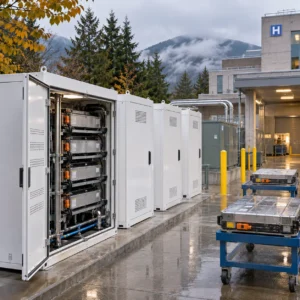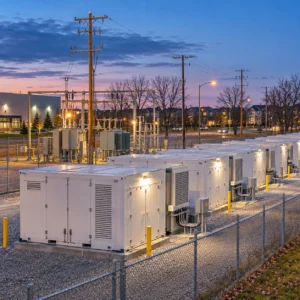
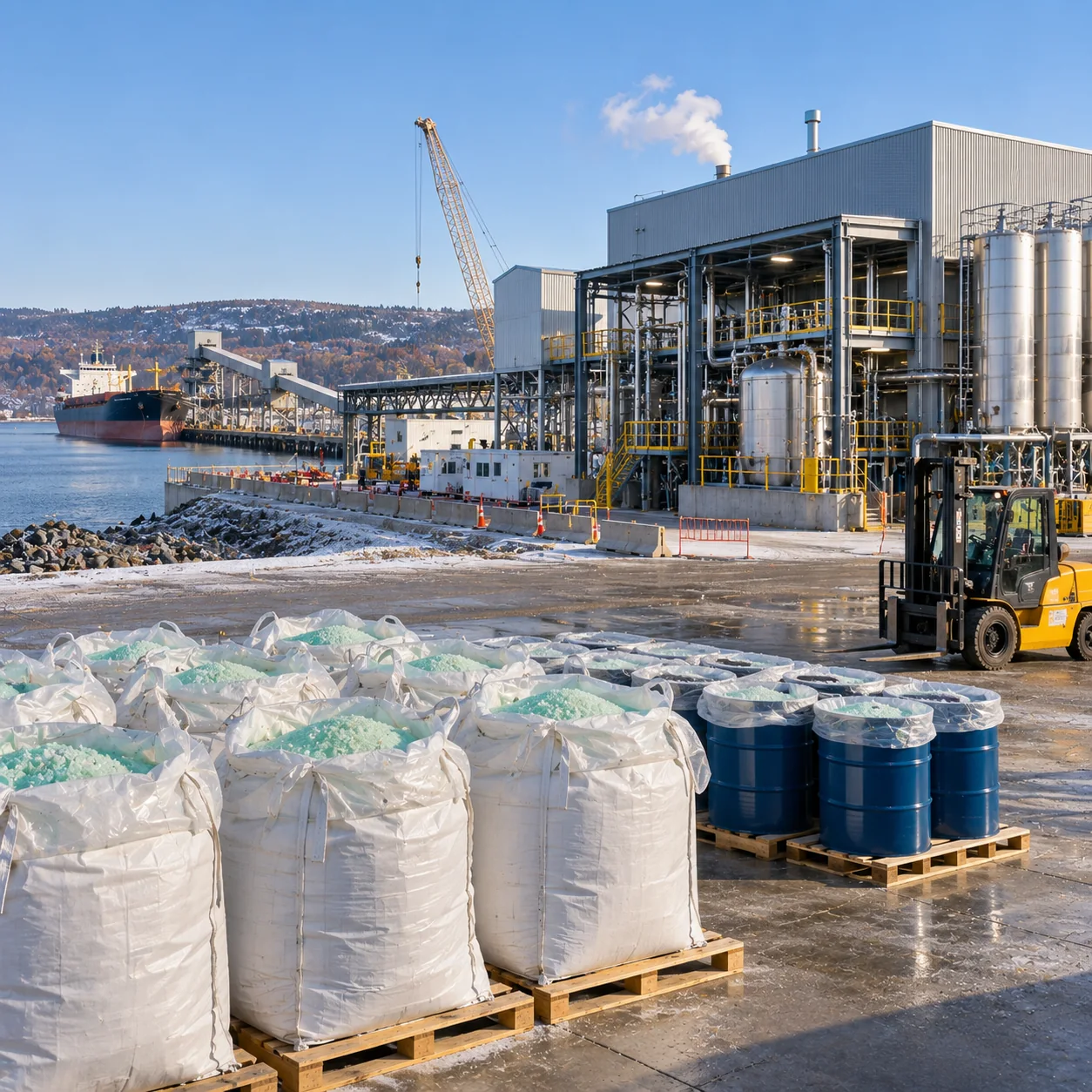
Canada has mines. It is getting cell plants. The part in between is still thin.
On November 17, 2026, Toronto-based Electra Battery Materials said it had expanded its Supply Chain Cooperation Agreement with Positive Materials to cover Electra’s potential future production of battery-grade nickel sulfate and nickel metal. The original agreement, signed in November 2025, covered only cobalt sulfate.
Positive Materials is the private Canadian company behind Project Positive+, a planned precursor cathode active material plant in Belledune, New Brunswick. Precursor material, usually shortened to pCAM, is the step between refined metal salts and the finished cathode.
Two Canadian midstream projects are now designing their products around each other before either one is running at scale. That is the real news here.
What the Amended Agreement Actually Covers
No tonnage changes hands under this amendment. It is a cooperation framework, and both companies describe it that way.
According to Electra’s release, the two will work to make Electra’s nickel and cobalt products compatible with the Belledune facility, which is being engineered to produce both high-energy and high-power pCAM. The planned work includes:
- Matching nickel and cobalt sulfate specifications and impurity limits to Positive’s process requirements
- Exchanging samples for materials testing and qualification
- Coordinating delivery formats and logistics
- Evaluating downstream processing and procurement pathways for Electra’s future nickel products
The stated aim is to shorten qualification timelines and reduce technical risk for cathode and cell manufacturers that want North American refined, traceable material.
That is a modest step on paper. In practice, qualification is often the slowest part of bringing a new battery material to market.
A 20,000 Tonne Nickel Refinery Is Still on the Drawing Board
The nickel side of the deal rests on a refinery that does not exist yet.
Electra published preliminary engineering results in September 2026 for the first phase of a proposed North American nickel refinery. The study looked at converting mine-derived feedstock into battery-grade nickel sulfate at roughly 20,000 tonnes per year of contained nickel, with early process modelling pointing to nickel and cobalt recoveries of 97 percent or higher.
The company is open about what remains unsettled. Further engineering is planned for nickel metal production. A site has not been named. Chief executive Trent Mell said the focus now is securing feedstock, offtake and financing.
Seen that way, the Positive amendment is a piece of commercial groundwork. A refinery that can show a prospective lender a named downstream partner, with agreed specifications, is an easier project to finance than one selling into an open market.
Why Precursor Material Is the Gap Worth Closing
Positive Materials calls pCAM the missing link in the North American battery supply chain. The description is fair.
Refined nickel and cobalt salts cannot go straight into a cell. They have to be combined into precursor, then turned into cathode active material. North America has very little of that conversion capacity, so metal mined and refined in Canada can still have to leave the continent before it returns inside a battery.
Belledune is meant to change that. Positive says the facility is designed as a flexible platform across mid to high nickel and next-generation chemistries, using commercially proven technology. Project Positive+ is a collaboration between the company and the Pabineau First Nation and Ugpi’Ganjig First Nation, on whose ancestral territory the project sits.
Positive chief executive Marco Romero put the case plainly in the release: a competitive North American battery materials industry requires stronger connections between refining and downstream manufacturing.
A refinery in one province feeding a precursor plant in another is exactly that kind of connection.
Recycled Feedstock and Defence Demand Widen the Customer Base
Two other details in the release deserve attention from investors.
First, Electra plans to evaluate a second phase that would process recycled battery black mass, recovering nickel, cobalt, lithium and graphite. The company notes that more jurisdictions are restricting black mass exports. A plant able to take both mined and recycled feed would give North American recyclers a local outlet and keep recovered metal in the regional supply chain.
Second, the refinery is being designed for product flexibility. Nickel sulfate would go to battery makers. Nickel metal could serve industrial and defence customers, including aerospace.
That second market matters more than it might appear. A refinery with two customer groups is less exposed to swings in any single one, and that is a steadier story to take to lenders.
What Canadian Developers and Investors Should Watch Next
Electra is already building a cobalt sulfate refinery in Northern Ontario, the first step in what it describes as a phased midstream strategy. Nickel and recycling are the planned second and third steps.
The questions that will decide whether this agreement turns into shipments are familiar ones.
Where will the nickel refinery be built?
Who supplies the feedstock, and who signs the first binding offtake?
For Positive, the equivalent milestones are financing and construction at Belledune. For cell makers and automakers, the point of interest is simpler: whether a qualified, Canadian-refined nickel and cobalt stream into Canadian-made precursor becomes available on a timeline that fits their sourcing plans.
Neither company has promised dates. Both have now committed to doing the specification work early, while the designs can still be changed.
Canada’s battery strategy has spent years on the two ends of the chain. The middle gets built one compatibility test at a time.