Canada’s battery value chain just found value in packs that were heading for retirement.
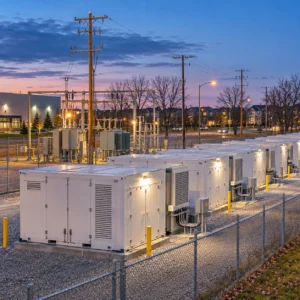
On November 17, 2026, Moment Energy, a Canadian battery repurposer with a factory in British Columbia, launched Nova, a stationary energy storage system built from used electric vehicle battery packs. Each block delivers 200 kW of power and 500 kWh of energy, enough to discharge at full power for two hours, according to Latitude Media, and installations can scale into the tens of megawatt hours.
The headline claim is about safety paperwork, and that is exactly why it matters. Moment Energy says Nova is the first battery energy storage system made with repurposed EV batteries to achieve both UL 1973 and UL 9540 certification. Orders opened on launch day, and first deliveries are planned for the first quarter of 2027.
Certification Is the Product
Second-life batteries have never lacked a story. They have lacked a stamp.
Commercial and industrial buyers, insurers and fire officials want storage that has been tested to the same standards as systems built from new cells. Nova has been tested to UL 9540A, the method used to evaluate thermal runaway fire propagation, according to the company. Its British Columbia factory holds UL 1974 certification, which covers sorting, grading and repurposing used EV batteries, pv magazine reports.
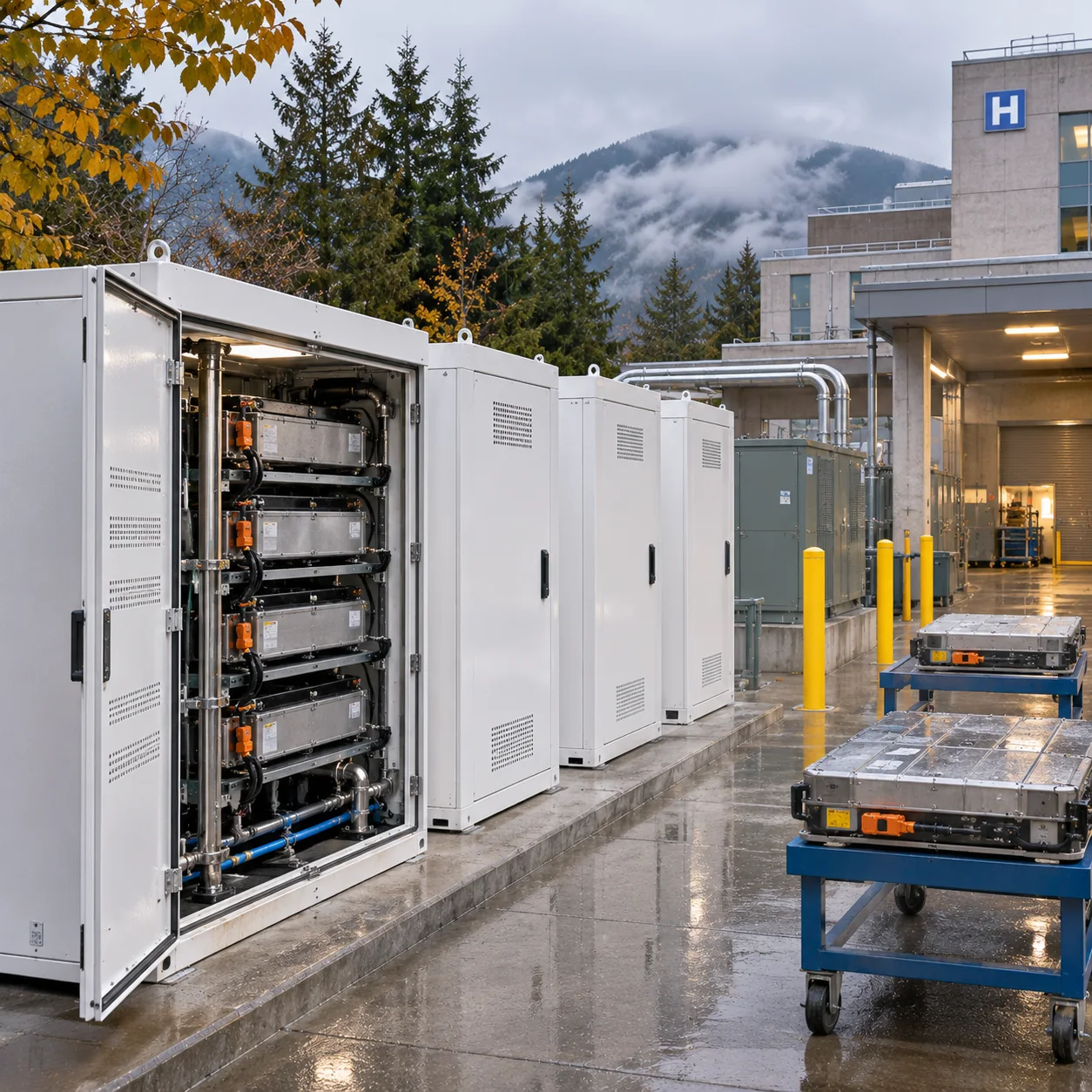
Chief executive Edward Chiang told Latitude Media that the certification supports installation close to buildings. That opens the sites Moment is targeting: hospitals, airports, manufacturing plants, agricultural operations and data centers.
That is where behind-the-meter storage earns its keep.
Inside a Box Built for Mixed Batteries
The engineering challenge with repurposed packs is variety. Batteries arrive from different automakers, with different chemistries, architectures and states of health. Nova’s battery management system and power electronics are designed to accept that mix, and individual packs can be swapped without disturbing the enclosure.
A company spokesperson described the approach to ESS News, as quoted by pv magazine: “In plain terms, the BMS learns how each pack behaves in practice, such as its capacity, resistance, and aging rate.” Packs are screened for state of health, internal resistance, physical integrity and usage history before assembly, and units that fail go to recycling.
The hardware is built for Canadian conditions as much as commercial ones. According to the company, the system:
- Operates from minus 25 °C to 50 °C and up to 2,000 metres of altitude
- Carries an IEEE 693 high seismic rating
- Uses liquid cooling with smoke, heat and flammable gas detection plus deflagration prevention
- Fits each block in a footprint of 2.94 m by 1.80 m, roughly the size of a parking spot
- Supports grid-tied, grid-forming and virtual synchronous generator modes
- Offers a capacity augmentation service the company says extends system life beyond 20 years
A Feedstock That Grows Every Year
The supply side of the business is getting bigger whether or not new EV sales accelerate. Chiang told Latitude Media that roughly 300 GWh of used battery feedstock is available today, growing to 950 GWh by 2030, based on EVs sold years earlier.
Moment sources packs through partnerships with automakers. It previously disclosed using retired modules from Nissan and Mercedes-Benz in its earlier Luna system, according to pv magazine, though the company has not named the sources for Nova.
Every pack that gets a second life as grid storage delays its trip to a recycler, and extracts more value from minerals that were mined, refined and manufactured once already. For a country building a circular battery strategy, that is a useful middle step between the vehicle and the hydrometallurgy plant.
Competing on Cost and Supply Chain Origin
Price is the other half of the case. Chiang told Latitude Media that Moment’s systems are 30% cheaper than Chinese alternatives before tax credits, with savings reaching as much as 70% once incentives are included.
Moment Energy also says independent verification confirms Nova’s compliance with US foreign entity of concern rules, which positions the system for the US federal Investment Tax Credit in 2027 and beyond. An external law firm reviewed the company’s bill of materials, suppliers and shareholders to support that claim, Latitude Media reports. Chiang argues that repurposing packs already in service reduces exposure to new Chinese supply.
For a Canadian manufacturer, that compliance work matters. It turns a British Columbia product into one that can compete for projects across North America.
What Nova Means for Canada’s Battery Value Chain
Moment Energy is backed by investors including Amazon’s Climate Pledge Fund and closed a $40 million Series B earlier in 2026, according to Latitude Media. Chiang says Amazon is also its largest customer. The company plans a larger factory in Austin, Texas, with 2 GWh of annual capacity, while its Canadian operation carries the UL 1974 certification that underpins the repurposing process.
Most attention in Canada’s battery strategy goes to mines, refineries and cathode plants. Those are essential. But the value chain also needs companies that can take packs out of vehicles and put them back to work safely, with documentation that commercial buyers accept.
Can repurposed storage become a standard option for hospitals and factories rather than a pilot?
Can Canadian repurposers capture enough retired packs to scale alongside new cell production?
Nova’s certifications answer the first question with a credible yes. The second depends on how quickly automakers, utilities and commercial buyers treat used EV batteries as an asset class.
The first life of a battery moves cars. The second can keep the lights on.