Canada’s lithium ambitions run on roads as much as on rock.
On 28 October 2026, Energy and Natural Resources Minister Tim Hodgson announced C$1,215,185 in federal funding through Natural Resources Canada’s First and Last Mile Fund to upgrade the access road to the Shaakichiuwaanaan lithium project in the Eeyou Istchee Baie-James region of northern Quebec.
The project is led by Innova Lithium, a wholly owned subsidiary of PMET Resources. The federal release describes Shaakichiuwaanaan as one of the largest lithium resources in the world, and the deposit also holds caesium and tantalum.
The dollar figure is modest. The signal is not.
Twenty Kilometres That Connect a Deposit to a Supply Chain
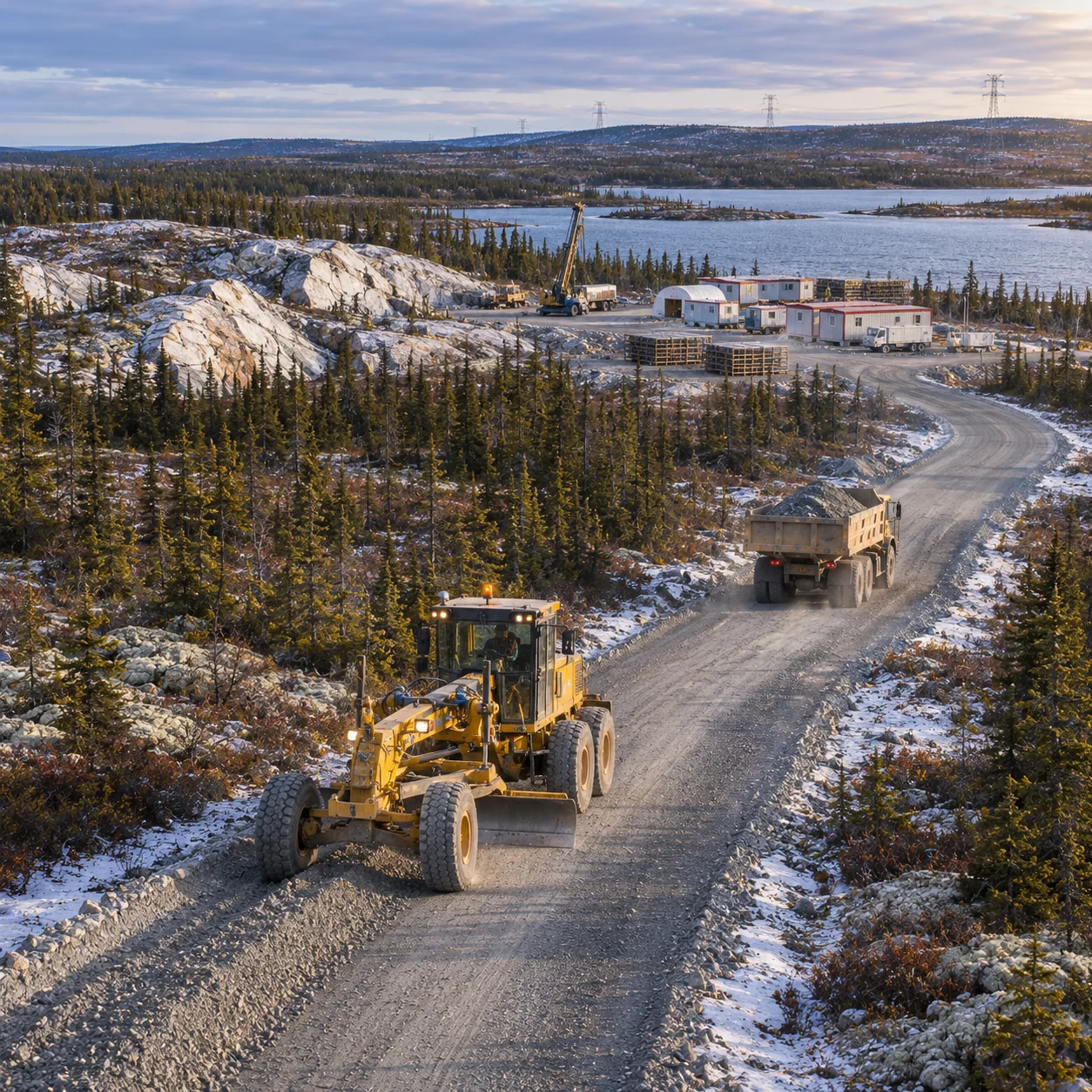
The funding will rehabilitate and upgrade about 20 kilometres of existing access road connecting the Trans-Taiga Road to the Shaakichiuwaanaan site. According to Natural Resources Canada, the work will improve road safety and provide year-round access between the highway, the project camp and the mineral site.
PMET says the upgrade is meant to improve reliability and capacity to support increased mining activity. The road is owned by the company, and the property already sits near regional hydroelectric infrastructure.
For a remote project in James Bay, that matters a great deal. Construction equipment, fuel, camp supplies and eventually spodumene concentrate all have to move over the same route. A road that can carry heavy traffic in every season removes one of the most common sources of schedule risk in northern mining.
Minister Hodgson put it plainly, saying road infrastructure “turns mineral deposits from potential into real projects.”
A Resource Large Enough to Matter
The scale of the deposit explains why access is worth funding. PMET reports the following figures for Shaakichiuwaanaan:
- Indicated lithium resource of 108.0 million tonnes at 1.40% Li₂O
- Inferred lithium resource of 33.4 million tonnes at 1.33% Li₂O
- Probable mineral reserve of 84.3 million tonnes at 1.26% Li₂O
- Indicated caesium resource of 0.69 million tonnes at 4.40% Cs₂O
- A feasibility study flowsheet targeting up to about 800,000 tonnes per year of spodumene concentrate
The company says the resource ranks among the top ten lithium pegmatites in the world by size. Its positive lithium-only feasibility study on the CV5 pegmatite, released in October 2025, is based on a dense media separation only flowsheet.
In September 2026, Shaakichiuwaanaan was also included in a federal investment prospectus, placing it among the projects Ottawa is actively presenting to investors.
Why the First and Last Mile Fund Is Built for This
The First and Last Mile Fund is backed by C$1.5 billion announced in Budget 2025. It is designed to build the infrastructure new mines need and to prioritise projects that move resources to customers efficiently and responsibly. PMET’s application was made under the Critical Minerals Infrastructure Fund, which has since been folded into the larger program.
That design reflects a basic fact about Canadian critical minerals. Many of the best deposits sit far from rail, ports and highways. Natural Resources Canada also notes that most critical mineral deposits and enabling infrastructure lie on Indigenous territories, which is why the fund includes support for Indigenous leadership, engagement and participation across the mining value chain.
Mandy Gull-Masty, the Member of Parliament for Abitibi-Baie-James-Nunavik-Eeyou, said developing critical minerals “requires the infrastructure to connect remote regions to economic opportunities.”
Infrastructure money of this kind rarely makes headlines. It does, however, change the order in which projects reach production.
What Battery Supply Chain Buyers Should Watch
For cathode makers, cell manufacturers and automakers looking for North American lithium, the question is never only how much lithium sits in the ground. It is how reliably that lithium can leave the site.
Projects with secure access, clear permitting progress and government backing tend to move up the list when offtake partners and lenders compare options. Small enabling grants are often the first sign that a project is being treated as part of a national supply chain rather than as a standalone mine.
PMET says other federal funding tools are being assessed, although there is no assurance they will be provided. Chief executive Ken Brinsden said “Infrastructure is an important part of bringing a new mine into production,” and described the funding and the prospectus listing as encouraging recognition of the project’s potential for Canada’s critical minerals supply chains.
From Potential to Production Starts With Access
Quebec holds a large share of the deposits Canada is counting on for battery materials. Turning those deposits into supply depends on projects like Shaakichiuwaanaan moving from studies into construction.
A road upgrade will not build a mine on its own. It does remove one of the practical barriers between a world-class deposit and the battery plants that need its output.
That makes execution the next test.
Canada already knows where the lithium is. The work now is building the routes that bring it to market.